
Explore numbers with real objects
Count, pair, and move objects before asking for a written answer.
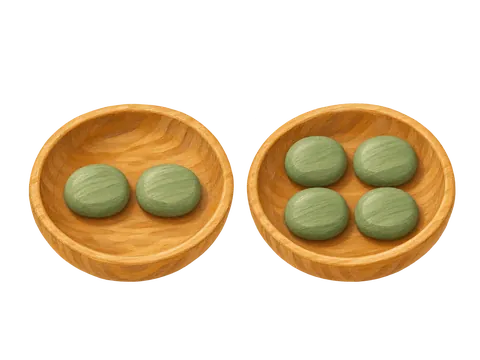
Connect the object and the number
Choose a few counters that are easy to move. Touch or move one object for each number word: one, two, three. Then say, “Three counters altogether,” and show the numeral 3. Use the same number of objects when you rearrange them; count again together if your child wants to check.
Compare by making pairs
Put two small groups side by side. Give each object in one group a partner in the other. If there are unpaired objects, that group has more. If every object has a partner, the groups have the same amount. Keep the objects a similar size so a bigger-looking object does not become a different clue.
Make a number in two parts
Put two counters on a five-frame. Ask your child to fill the empty places. Say what you see: “Two were here. We added three. Now there are five.” You can write 2 + 3 = 5 after showing it with objects. Try another starting amount only if your child wants another turn.
Use a number line
Start at 0 and move to the next mark as you say each number. To reach 3, make three moves: 0 to 1, 1 to 2, and 2 to 3. Point to the final location. The starting mark is not an extra move. Keep the spaces between marks equal.
Keep the connection visible
The IES mathematics practice guide recommends concrete and visual representations and discusses number lines as teaching tools. Our paper activities use those representations; this does not establish that MindFluent produces a particular result. Ask your child’s teacher which number range and representation fit current classroom work.
Source: IES mathematics practice guide
Continue on paper
Numbers you can touchSources and further reading
MindFluent’s examples and printables are original materials. Links provide background or further reading; these organizations have not reviewed or endorsed MindFluent.