Help without taking over
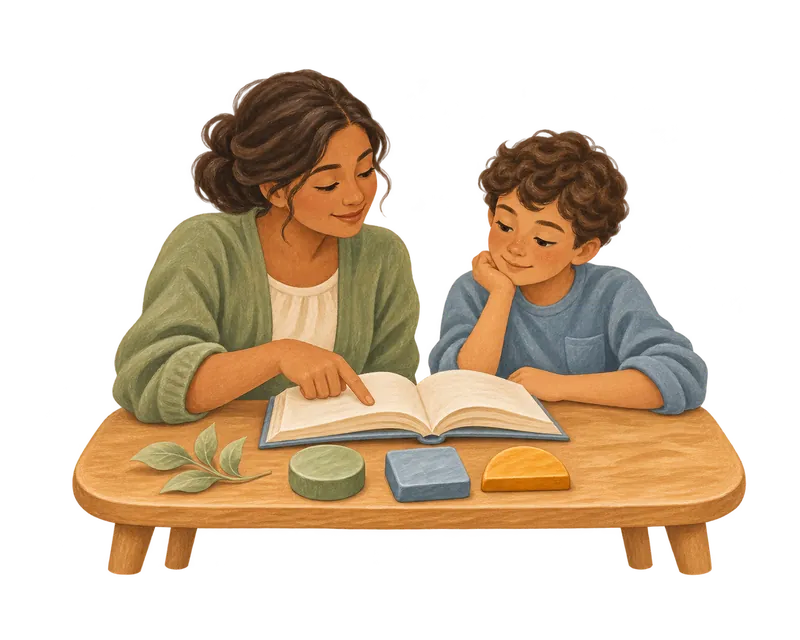
Offer one small clue, then leave space for your child’s next move.
Ask before stepping in
Try, “Would you like a clue, a demonstration, or another turn?” Your child may want you nearby without wanting an answer. Give them room to look, touch, or think. There is no need to count down or turn the pause into another task.
Point to the part that matters
In Compare Groups, you might say, “Let’s give each stone a partner.” Put one stone from the left group beside one from the right. Keep pairing until one group runs out. Ask what is left. This shows a way to compare the groups instead of naming the correct tray.
Show one step, then hand it back
For a word-building task, point to the first letter or say the word clearly. If the letter–sound pattern is unfamiliar, explain it rather than asking the child to guess. For a sequence, show the first tap and invite the next one. If more explanation is needed, doing the whole example together is also an option.
Describe what happened
Use a specific observation: “You checked each stone,” or “You went back and changed that letter.” If the answer is not right, try, “Let’s look at this part together.” Avoid linking a single answer to being smart, good, fast, or behind.
Record help honestly
Show me is part of learning, not a penalty. MindFluent records its own hints, but it cannot detect a clue you give beside the screen. If you share a result with a teacher, add a brief note about any help you provided. A useful note describes the support, not a judgment about the child.
Continue on paper
Numbers you can touchSources and further reading
MindFluent’s examples and printables are original materials. Links provide background or further reading; these organizations have not reviewed or endorsed MindFluent.